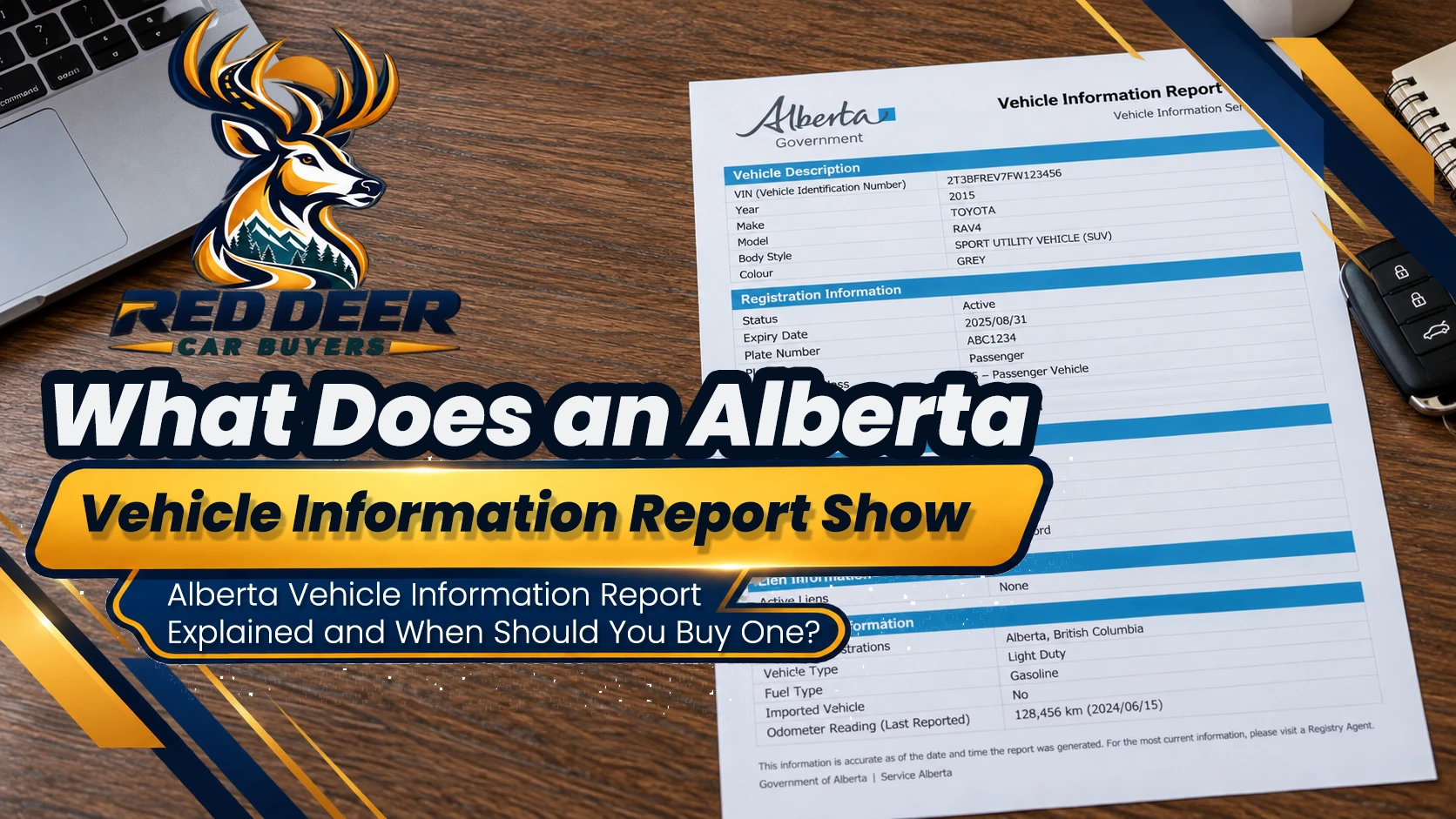
You’ve found a used car in Red Deer that looks decent in the photos, but “looks decent” isn’t the same as “clean history.” Before you hand over cash or sign a bill of sale, there’s a $21.10 government report that tells you things a test drive never will: whether the car’s been written off, how many liens are attached to it, and where it’s been registered.
That’s the vehicle information report, and most buyers either don’t know it exists or assume it’s something the seller has to provide. Neither is true. This guide covers what a vehicle information report Alberta VIR pull actually shows, what each status code means for you as a buyer or seller, what it costs, and the point in a private sale where ordering one actually matters.
Selling a Car With a Rough VIR Status in Red Deer?
If you’re on the selling side and your vehicle carries a salvage, rebuilt, or non-repairable status, private buyers tend to get nervous the moment that word shows up on a VIR, even when the car drives fine. Financing often falls through, insurance quotes come in higher, and negotiations drag out over a status line that scares people more than it should. Red Deer Car Buyers looks at these vehicles directly and gives you a straightforward cash offer, no explaining a status code to a skeptical stranger required. Reach us at hello@reddeercarbuyers.ca or (587) 797-0700.
- Free Quote
- Same-Day Payment
- Local Red Deer Team
What Is an Alberta Vehicle Information Report (VIR)?
A VIR is a government-issued report that pulls a vehicle’s registration history straight from the Alberta Motor Vehicle system. Anyone can request one using just the vehicle’s VIN, whether or not they own the car or have any relationship to the current owner. It’s not tied to your identity as a buyer or seller; it’s tied to the vehicle.
The catch is right there in the name: it’s an Alberta report. If the car spent five years registered in Ontario before landing in Red Deer, none of that history shows up. A VIR only reflects what happened to the vehicle while it was in Alberta’s system.
What Information Does an Alberta Vehicle Information Report Show?
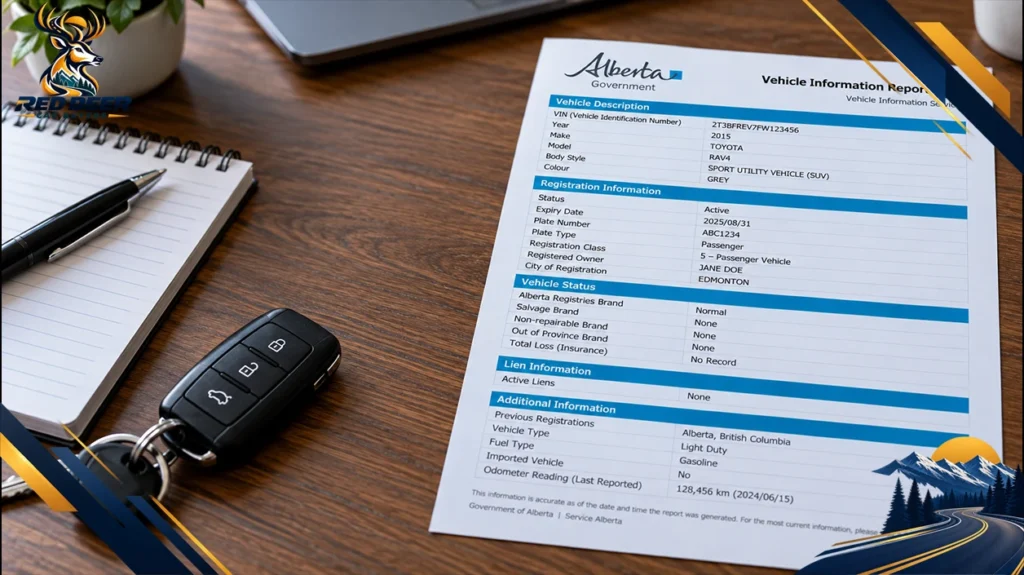
The report covers five categories of information:
- Vehicle description. Year, make, model, style, color, and fuel type.
- Vehicle status. Whether the car is active, salvage, rebuilt, non-repairable, or unsafe.
- Odometer reading. Only shown if a previous owner or registry transaction actually recorded one. A blank field here doesn’t mean the car has no mileage; it means nobody logged it.
- Registration dates and locations. Where and when the vehicle has been registered within Alberta.
- Lien count. How many liens are registered against the vehicle in Alberta, if any.
That last point trips people up. The VIR tells you a lien exists; it doesn’t tell you who holds it or how much is owed. For that level of detail, you need a separate Personal Property Registry search through a registry agent.
The registration dates and locations section is worth slowing down on too. A vehicle that’s bounced between several Alberta cities in a short window isn’t automatically a red flag, but it’s a pattern worth asking about. Frequent re-registrations can mean multiple owners in quick succession, a vehicle that changed hands through a series of quick flips, or simply someone who moved a few times. On its own it’s just a data point, but paired with a status other than active, it’s a reason to ask the seller more questions before you commit.
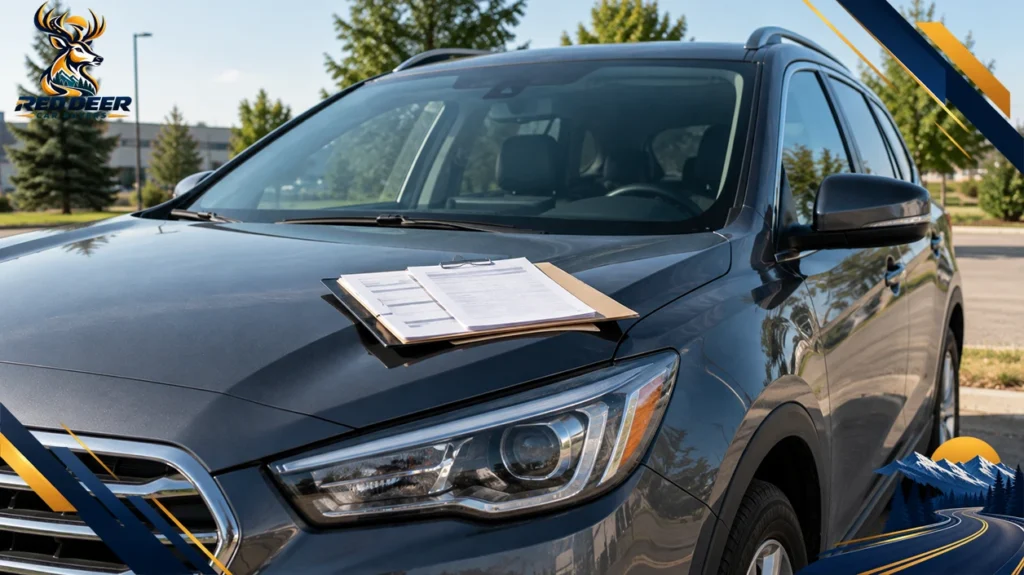
What Does Each Vehicle Status Mean on an Alberta VIR?
The status field is the single most useful line on the report, and it’s worth understanding before you read anything else on the page.
Active. The vehicle has no salvage, rebuilt, or unsafe designation attached to it. This is the status you want to see on a car you’re planning to drive daily.
Salvage. An insurance company declared the vehicle a total loss, usually because repair costs exceeded its value after a serious collision, fire, or flood. A salvage vehicle can’t legally be driven or registered for road use until it’s repaired and passes a Salvage Vehicle Inspection.
Rebuilt. A vehicle that was previously salvage, got repaired, and passed inspection. The rebuilt status is permanent. It follows the vehicle for the rest of its life and typically affects resale value and insurance rates, even years after the repair.
Non-repairable. This is a separate outcome from salvage, not a more severe version of it. A non-repairable designation means the vehicle can never be re-inspected or returned to the road under that VIN, regardless of what repairs are done. These vehicles exist for parts only.
Unsafe. A distinct designation that flags a vehicle as failing to meet safety requirements, separate from the collision-related salvage and non-repairable categories.
If you see anything other than active on a car you’re considering, that’s the moment to ask direct questions and get a mechanical inspection before you go any further.
Tips:
If your vehicle status isnt listed above you can also check out Cash For Cars Red Deer and find out what category your car falls into and whether you can sell it as is.
How Much Does a Vehicle Information Report Alberta VIR Cost?
Ordering online through Alberta’s eServices portal costs $21.10, all service charges included, and you’ll need a verified Alberta.ca Account to complete the order. You can also request one in person through any Red Deer registry agent using just the VIN; the base government fee is the same, though the agent’s service charge may vary slightly.
Either way, you get a printed or downloadable report with the vehicle’s history on the front and an explanation of each field on the back, so you’re not left guessing what a given status code or abbreviation means.
When Should You Buy a VIR Before Buying a Used Car in Red Deer?
The VIR is one piece of a larger pre-purchase check, not a replacement for the rest of it. The right sequence looks like this:
- Get the VIN directly off the vehicle, not from the listing. Check it against the metal plate on the dashboard and the sticker in the door jamb before you order anything, since a VIR run on a mistyped VIN will just come back clean for a car that isn’t the one you’re looking at.
- Order the VIR before you commit to anything beyond a test drive. If the status comes back salvage, rebuilt, or non-repairable, you want that information before you negotiate a price, not after.
- Pair it with a Personal Property Registry search if the VIR shows any liens, so you know exactly what you’re dealing with before money changes hands.
- Get a mechanical inspection regardless of what the VIR shows. The report tells you the vehicle’s paper history in Alberta; it says nothing about how the engine sounds or whether the brakes need work.
Skipping straight to a handshake because the car looks fine in person is exactly how buyers end up owning a rebuilt-status vehicle they didn’t know about until they tried to insure it.
What Doesn't an Alberta Vehicle Information Report Tell You?
A VIR has real limits, and knowing them keeps you from over-trusting a clean-looking report.
It only covers Alberta history, so a vehicle that spent most of its life registered somewhere else will show a thin record here even if it has a rough past elsewhere. It doesn’t include detailed lien information, just a count. It won’t catch a status that’s been obscured by moving the vehicle through provinces with different rebranding rules, since each province tracks and applies salvage or rebuilt designations a little differently. And it’s not a substitute for a mechanical or structural inspection; a car can carry an active status and still need thousands of dollars in repairs.
None of this means the VIR isn’t worth the $21.10. It means treating it as one input among several, not the final word on a vehicle’s condition or history. A buyer who orders a VIR, runs a lien search when needed, and books a mechanical inspection has covered the three angles that actually matter: the paper trail, the financial encumbrances, and the physical condition of the car sitting in front of them.
Answers to Common Questions
Yes. The VIR isn't tied to ownership; anyone can request one using the vehicle's VIN. This makes it a practical tool for buyers who want to check a car's Alberta history before they commit to a purchase, not just for current owners checking their own vehicle.
No. The report only reflects the vehicle's registration history within Alberta's system. If the car was previously registered in another province or country, that history won't appear on the report at all, so a thin-looking Alberta record doesn't necessarily mean the vehicle has a thin history overall.
Salvage means the vehicle can potentially return to the road after repairs and a passed inspection at a licensed facility. Non-repairable means it never can, regardless of what work is done to it. They're two separate outcomes on the status field, not different severities of the same designation.
The odometer field only populates when a previous transaction actually recorded one. If a past owner declined to provide it, or the last transaction didn't require it, the field stays blank. It doesn't mean the vehicle has no mileage on record anywhere.
Yes, they cover different things. A mechanical inspection tells you the vehicle's current condition. A VIR tells you its paper history, including whether it's ever been salvage or rebuilt and whether liens are attached. Skipping either one leaves a real gap in what you know before you buy.
Not directly. The VIR only shows how many liens are registered against the vehicle in Alberta, not who holds them or the amount owed. For that level of detail, you need a separate Personal Property Registry search, which any registry agent can run for you.
Selling a Car With a Rough VIR Status in Red Deer?
If you’re on the selling side and your vehicle carries a salvage, rebuilt, or non-repairable status, private buyers tend to get nervous the moment that word shows up on a VIR, even when the car drives fine. Financing often falls through, insurance quotes come in higher, and negotiations drag out over a status line that scares people more than it should. Red Deer Car Buyers looks at these vehicles directly and gives you a straightforward cash offer, no explaining a status code to a skeptical stranger required. Reach us at hello@reddeercarbuyers.ca or (587) 797-0700.
- Free Quote
- Same-Day Payment
- Local Red Deer Team
How Do You Get the Most Out of an Alberta Vehicle Information Report?
A vehicle information report costs $21.10, takes minutes to order with just a VIN, and tells you more about a used car’s paper trail than a walk-around ever will. Read the status field first, treat anything other than active as a reason to slow down and ask questions, and pair the VIR with a lien search and a mechanical inspection rather than treating it as a full history on its own.
That combination is what actually protects you, whether you’re buying your next car in Red Deer or making sure you understand what a buyer will see about yours before you list it for sale. A few minutes and a small fee is a reasonable, worthwhile trade for knowing exactly what you’re actually getting into on either side of the deal.
References
- Government of Alberta. Vehicle Information Report
- Government of Alberta eServices. Vehicle Information Report (Order Form)
- Government of Alberta. Salvage Vehicle Inspections
- Alberta Motor Vehicle Industry Council (AMVIC). Researching the Vehicle