
You’ve found a buyer for your car in Red Deer, agreed on a price, and now there’s one form standing between you and a done deal. Most private sellers have heard of the bill of sale, but far fewer know which fields the registry actually requires versus which ones are just good practice.
Miss a mandatory field and the buyer gets turned away at the counter, then has to track you down for a corrected copy while the whole transaction drags out by days. That delay is avoidable. This guide covers how to fill out Alberta bill of sale REG3126 field by field, the mistakes that send buyers back to redo it, and where a direct sale to a cash buyer skips the car selling paperwork altogether.
Standard Bill of Sale vs. Comprehensive Bill of Sale
Alberta actually has two versions of this form, and using the wrong one is its own kind of hassle. The standard bill of sale is what you need for a private sale between individuals: you selling your car to a neighbor, a coworker, or someone who found your listing online. The comprehensive bill of sale applies when buying or leasing a vehicle from a business. Dealers have to disclose extra details like their business address, license number, payment breakdowns, and vehicle history, so their version of the form carries more fields.
If you’re a private individual selling to another private individual in Red Deer, the standard REG3126 is the one you want.
Mandatory Fields on the Alberta Bill of Sale REG3126
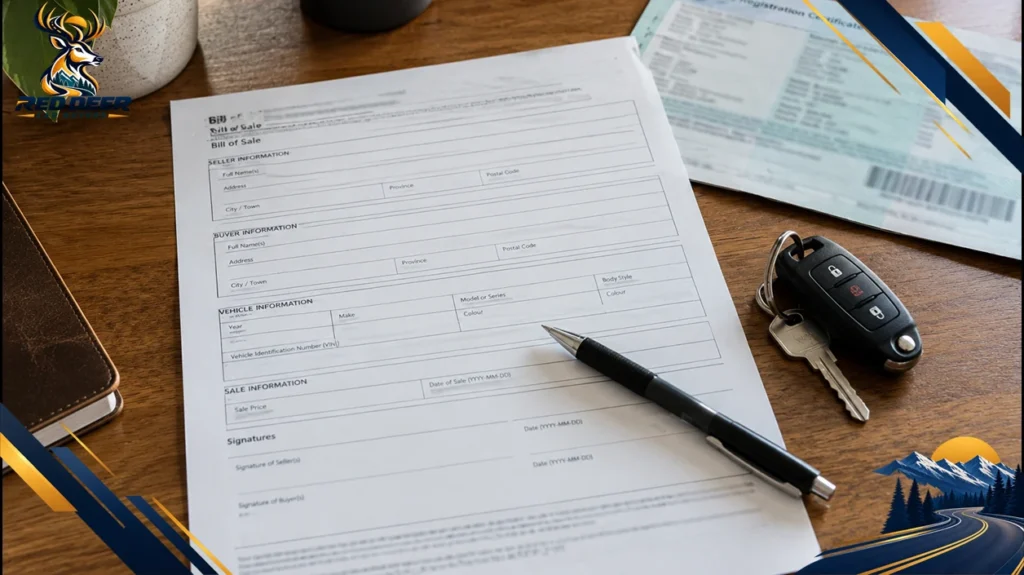
Alberta’s dedicated standard bill of sale form guidance lists five pieces of information the form should include. Miss any of these and the registry agent will typically ask for a corrected form before the transfer can go through.
- Full names and addresses. Every seller and every buyer needs their legal name and current residential address on the form. If the vehicle has two registered owners, both names go on the seller side, and both need to sign later. This trips people up more than any other field: a car registered to a married couple, for example, needs both spouses listed even if only one of them ever drove it.
- Vehicle identification number (VIN). This is the 17-character code stamped on the driver-side dashboard and repeated on the door jamb sticker. Copy it character by character straight off the vehicle itself, not from an old insurance card or a text message from the buyer. A single transposed digit means the form doesn’t match the vehicle records and may require a corrected copy.
- Vehicle description. Year, make, model or series, body style, and color all need to appear on the form. Color trips people up because it seems cosmetic, but if the car’s been repainted since it was last registered, list the current color, not the original one on file.
- Sale price. Write down the agreed cost of the vehicle. If you’re gifting the car to a family member, write “$0” or “gift” rather than leaving the field blank.
- Signatures. Both the buyer and the seller need to sign the form. If there are co-owners on either side, every one of them signs. A bill of sale with one signature missing from a two-owner vehicle is treated as incomplete.
Optional Bill of Sale Fields That Protect You Later
Alberta doesn’t require the following details, but skipping them is where sellers create headaches for themselves months later.
- Odometer reading. The dedicated standard bill of sale page lists the odometer reading as recommended rather than required, while a separate provincial buying guide includes it in the general list of what a bill of sale should contain. Either way, it’s the strongest piece of evidence a buyer has if the mileage turns out to be inaccurate, so write down the exact reading at the moment of sale and have both parties initial it.
- Witness signature. Not required, but a third-party witness signature provides an additional record that both parties signed the document, which can help if the sale is ever disputed.
- Liens or encumbrances. If there’s still money owed against the vehicle, note it. A lien search through any Red Deer registry agent before the sale closes tells you whether there’s a registered security interest against the vehicle. An outstanding lien can create real problems for a buyer, so it’s worth identifying and resolving before the sale closes, and the search itself is a cheap step compared to the alternative.
- Payment method and terms. Cash, check, e-transfer, or installments. Spelling out how and when payment happened heads off the “I thought that covered everything” conversation later.
- Phone numbers and ID details. Makes it possible to reach the other party if a question comes up after the fact.
- Where the vehicle was last registered. This matters most for vehicles coming into Red Deer from outside Alberta, since an out-of-province inspection may be required before new plates get issued.
None of these fields will get a form rejected if they’re missing. All of them make your life easier if something goes wrong six months down the road.
How to Fill Out the Alberta Bill of Sale Correctly the First Time
Knowing how to fill out the Alberta bill of sale REG3126 information correctly comes down to a handful of habits. Print clearly or fill the form in digitally before printing it out, then have every party sign and date it in person. Start at the top with the seller’s full legal name and address, then do the same for the buyer. Move into the vehicle section and copy the year, make, model, body style, color, and VIN directly off the vehicle rather than from memory or an old document.
Enter the agreed price, then have every party sign and date the form. If you’ve arranged a witness, that signature goes on too. Resist the urge to cross out and fix a mistake. A form with strikethroughs or heavy corrections is exactly the kind of document a registry agent will hesitate over. If you catch an error after printing, print a clean copy and start again rather than patching the original.
Each side should walk away with a signed copy. The buyer needs the original for the registry visit, but as the seller, keep your own copy. It’s your proof that ownership changed hands on a specific date, which matters if the vehicle turns up in an accident or a bylaw complaint after you’ve sold it.
Common Bill of Sale Mistakes That Get Rejected at the Registry
The same handful of mistakes account for most rejected bills of sale at Red Deer registry counters:
- VIN errors. One wrong character and the form doesn’t match the vehicle in the system. Always verify against the metal VIN plate, not an old registration document.
- Missing signatures. A two-owner vehicle with only one signature is an incomplete transfer, full stop.
- No proof of insurance. The buyer can’t register the car without active liability coverage on that specific vehicle, and most registry agents won’t even start the paperwork without seeing it.
- Illegible or altered forms. Smudged ink, crossed-out fields, or handwriting nobody can read all invite a second look and a possible refusal.
- Outstanding liens. If the seller still owes money against the car, an unresolved lien can create real problems for the buyer and hold up the transfer. This is exactly why a lien search before the sale is worth the small fee.
Any one of these sends the buyer back out the door to sort things out with you, which is the last thing either of you wants after you thought the deal was done.
How to Register Your Vehicle After Signing the Bill of Sale
A signed bill of sale doesn’t make anyone the registered owner on its own. The buyer still needs to visit a registry agent in person, and Red Deer has several locations to choose from. They’ll need to bring the original signed bill of sale, proof of valid insurance listing themselves as the policyholder, and acceptable photo ID such as an Alberta driver’s licence. If the vehicle was previously registered outside Alberta or carries a salvage designation, an out-of-province or salvage inspection certificate is required too.
The registry agent checks the documents, updates the provincial system, and issues a new registration certificate along with plates if the buyer needs them. Until that step is done, the vehicle shouldn’t be driven on public roads. Operating something that’s neither registered nor insured under the new owner’s name carries real penalties under Alberta’s Traffic Safety Act, and it’s not a risk worth taking to save an afternoon.
Key Questions Answered
No. The standard bill of sale REG3126 is designed for private individuals to fill out themselves, with no notary or legal review required. Both parties just need to complete the mandatory fields accurately and sign in person. Keep a copy for your own records in case questions come up later about the sale date or terms.
You shouldn't sign until you do. Ask for government-issued ID before finalizing the form, since a name that doesn't match the buyer's identification can cause registry problems later. This also protects you as the seller, since the bill of sale is your proof of who legally purchased the vehicle from you.
You can type the information into the form digitally, but both parties still need to sign it before it's submitted for registration. Whether you fill it in on a computer or by hand, plan to print a clean copy for the actual signatures.
As the seller, a lost bill of sale mainly matters if a dispute comes up about the sale date or terms later. There's no central government copy to request, so your best options are contacting the buyer for a copy of theirs or relying on other records, like an e-transfer confirmation, to establish when the sale happened.
No. The buyer still needs to visit a registry agent in person with the original signed bill of sale, proof of active insurance in their name, and valid photo ID. The bill of sale proves the ownership transfer, but registration is a separate step that has to happen before the vehicle can legally be driven.
The form will still be accepted without it, since Alberta doesn't make the odometer reading mandatory. That said, skipping it removes your strongest piece of documentation if a mileage dispute ever comes up. It takes ten seconds to write down and protects both the buyer and the seller.

Skip the Bill of Sale Entirely: Sell to Red Deer Car Buyers
Not every sale needs to go through the full private-sale process. If the car barely runs, the buyer pool for a private sale is thin to begin with, and chasing down a stranger to co-sign a bill of sale on a vehicle that might not pass an inspection anyway is its own kind of headache. Red Deer Car Buyers handles the entire transaction directly: we still fill out the bill of sale correctly on our end, but you’re not the one tracking down a buyer, negotiating a price, or hoping the form doesn’t come back rejected. If you’d rather skip straight to a cash offer, you can call or reach us at hello@reddeercarbuyers.ca.
- Free Quote
- Same-Day Payment
- Local Red Deer Team
Getting Your Alberta Bill of Sale Right the First Time
Five fields cover Alberta’s basic requirements for the form: names and addresses, the VIN, the vehicle description, the sale price, and signatures from everyone involved. Add the odometer reading, a witness, and any lien details on top of that, and you’ve covered the situations that actually cause problems months after the sale, not just the ones a registry agent might flag at the counter. Double-check the VIN against the metal plate, sign in person, and keep a copy for yourself. That’s the whole process, and it holds up whether you’re selling privately or deciding it isn’t worth the hassle.
References
- Government of Alberta. Standard Bill of Sale
- Government of Alberta. Comprehensive Bill of Sale
- Government of Alberta. Register a Vehicle in Alberta
- Government of Alberta. Out-of-Province Vehicle Inspections
- Government of Alberta. Buying from a Private Seller
- Government of Alberta. Final Steps Before You Purchase