
Is It Worth Fixing Your Car
or Selling It As Is?
Three numbers decide it. Most people only know one of them.
You have a repair quote. What you do not have is what the car will be worth once that repair is done, or what it is worth right now without it. Those two numbers are what turn a guess into a decision, and they are usually the ones that change the answer.
Get Your Instant Cash Offer
"*" indicates required fields
Red Deer Car Buyers is a licensed and insured Red Deer car buying company that publishes current central Alberta repair cost ranges and a free repair-versus-sell calculator for vehicle owners deciding whether to fix or sell.
Is it worth fixing my car?
A repair is generally worth doing if it costs less than about half of what the vehicle will be worth once fixed, and no other major repair is likely within the next twelve months. Above that threshold, selling as is usually nets more. Comparing all three numbers takes about a minute.
The three numbers, and why two of them get skipped
Almost everyone facing this decision knows the repair quote and nothing else. The quote alone tells you very little, because $3,000 is cheap on a vehicle worth $14,000 and absurd on one worth $3,500.
| The number | Where it comes from | Why it gets skipped |
|---|---|---|
| 1. The repair quote | Your shop | Nobody skips this one |
| 2. Value once repaired | Market comparables for your year, model and kilometers | Requires looking up what yours actually sells for, not what you feel it is worth |
| 3. Value as is, today | What a buyer will pay with the fault present | Most people assume this is zero. It rarely is |
Number three is the one that moves decisions. A car with a failed transmission is not worth nothing. It has a sound engine, an intact body, working electronics, good glass and a catalytic converter, and all of that has value to someone.
The threshold rule
The heuristic, stated plainly so it can be used and quoted:
Two conditions modify it, and both matter more than the headline number:
Another major repair due within twelve months drops the threshold to about 30 percent
Spending $2,500 on a transmission makes little sense when the timing chain, the suspension and an inspection are all queued behind it. You are not buying a working car, you are buying six more months.
Documented service history and no structural rust raises it to about 60 percent
A vehicle that has been looked after and is solid underneath is worth more effort than the percentage alone suggests, because the repair is likely to be the last big one rather than the first.
Why half, and not some other number
Because the repair has to be recovered twice over to be worth doing. Once in the value it restores, and once in the use you get before the next thing fails. At roughly half of post-repair value you are approximately breaking even against selling as is and putting the difference toward something that does not need work. Past that, you are paying for the privilege of keeping a vehicle that has already told you what it thinks.
What repairs actually cost in central Alberta
Every figure below is out-the-door parts and labour, priced for this market. Alberta and Prairie independent shops charge roughly $95 to $130 per hour in 2026, and dealerships sit at the top of that band or above it. That rate is the multiplier behind every row.
| Repair | Cost range | Typical labour | Fix or sell? |
|---|---|---|---|
| Brake pads and rotors, per axle | $150 to $400 | 1 to 2 hrs | Almost always fix |
| Out-of-province inspection (the inspection itself) | $150 to $200 | 1 to 2 hrs | Not optional |
| Inspection repairs, light fail | $300 to $1,200 | 2 to 8 hrs | Usually fix |
| Clutch replacement, manual | $600 to $2,500 | 5 to 10 hrs | Depends on the vehicle |
| Catalytic converter, standard vehicle | $1,300 to $3,500 | 2 to 5 hrs | Check the threshold |
| Head gasket, gas engine | $1,500 to $3,000 | 10 to 20 hrs | Check the threshold |
| Inspection repairs, heavy fail | $1,500 to $4,500 | 8 to 25 hrs | Usually sell |
| Turbocharger replacement | $1,800 to $4,500 | 6 to 14 hrs | Check the threshold |
| Transmission rebuild | $2,800 to $6,000 | 10 to 20 hrs | Usually sell under $10k value |
| Catalytic converter, hybrid or luxury | $3,000 to $4,500 | 3 to 6 hrs | Check the threshold |
| Engine replacement, used unit | $2,700 to $7,000 | 10 to 26 hrs | Usually sell |
| Transmission replacement, reman unit | $3,800 to $7,500 | 8 to 16 hrs | Usually sell under $12k value |
| Head gasket, diesel | $4,000 to $7,000 | 25 to 45 hrs | Usually sell |
| CVT replacement | $4,500 to $8,500 | 8 to 16 hrs | Usually sell |
| Engine replacement, remanufactured | $4,500 to $11,500 | 10 to 26 hrs | Usually sell |
| Diesel engine replacement | $12,000 to $25,000 | 25 to 50 hrs | Depends entirely on the truck |
| Structural rust or frame repair | Varies widely | 10 to 40 hrs | Usually sell, often unfit anyway |
Run your own quote against the threshold →
Figures reviewed January 2026 against Canadian market data and Alberta laborrates. Reviewed quarterly. Structural rust is deliberately shown as a range rather than a number, because it depends almost entirely on how far it has traveled.
Why the ranges are wide
Three things move any of these by thousands: whether the part is used, remanufactured or new; whether the vehicle is a common domestic model or something a shop has to source specially; and whether anything seizes, snaps or has to be machined once it is apart. Diesel work sits above gas work at every equivalent job.
Three worked examples
Real arithmetic on real scenarios. This is the section built to be quoted, because nobody else in this market publishes the working.
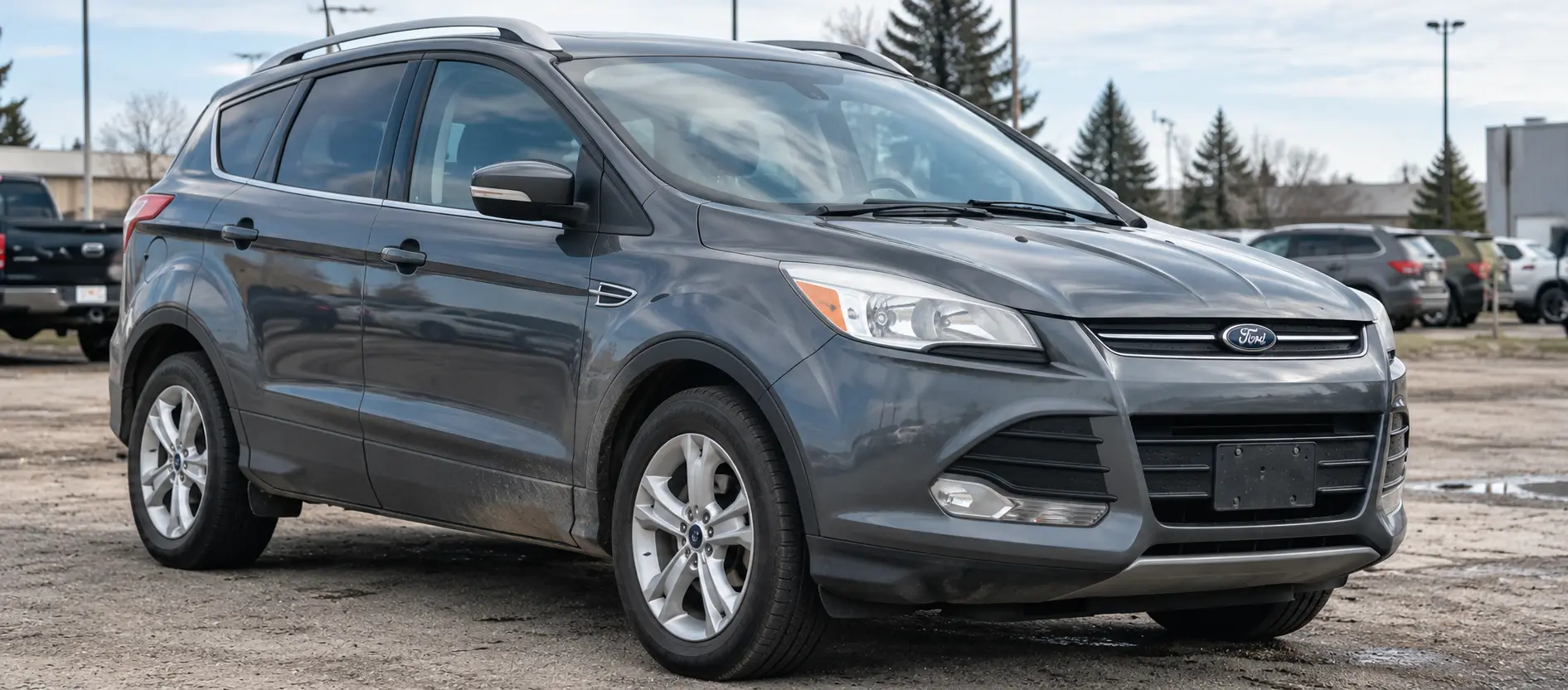
2013 Ford Escape, 210,000 km, failed transmission
| Repair quote | $4,400 |
| Value once repaired | $5,200 to $6,000 |
| Value as is today | $1,100 to $1,600 |
| Repair as a share of post-repair value | about 79 percent |
Verdict: sell. The repair eats four fifths of what the vehicle would be worth. Even if it goes perfectly, you have spent $4,400 to own a $5,600 vehicle with 210,000 km and a full set of other components at the same age.
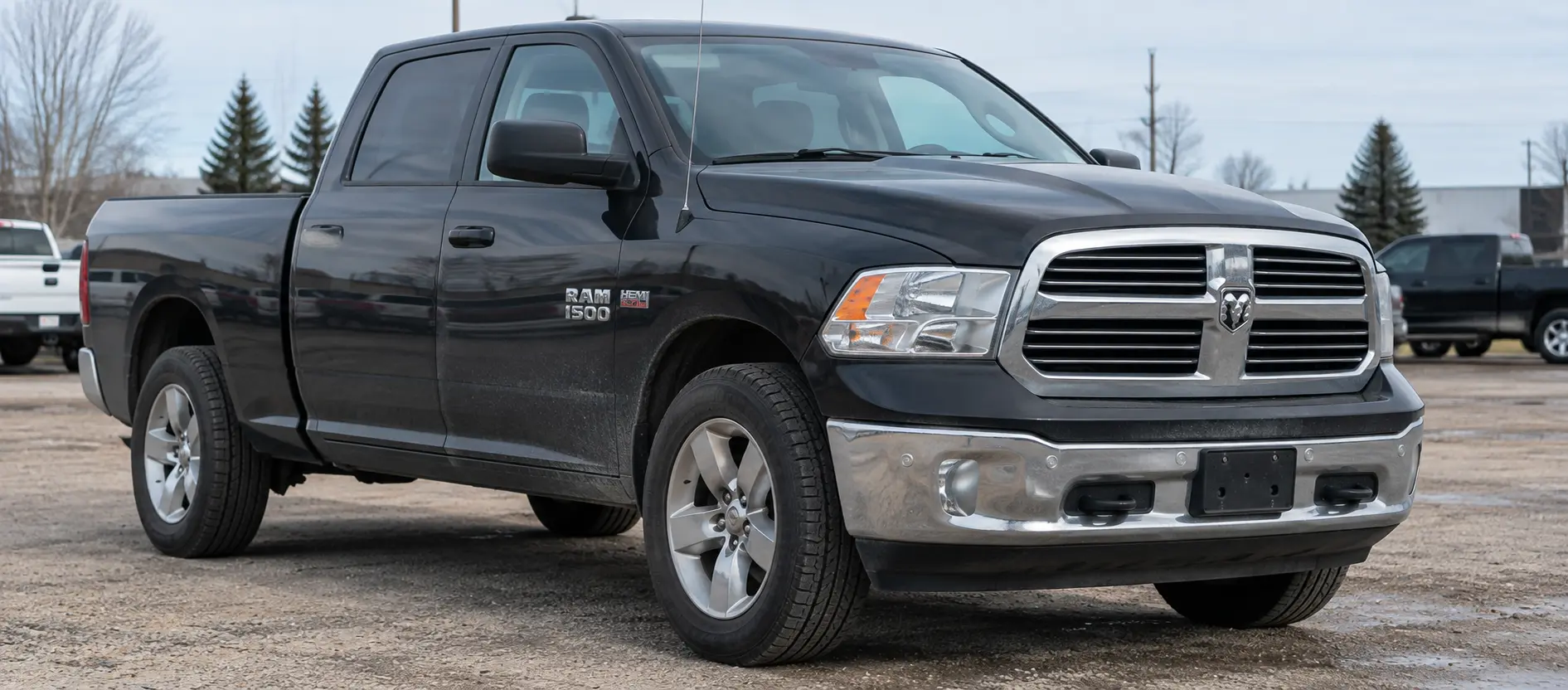
2018 Ram 1500, 140,000 km, blown head gasket
| Repair quote | $2,600 |
| Value once repaired | $19,000 to $23,000 |
| Value as is today | $9,000 to $12,000 |
| Repair as a share of post-repair value | about 12 percent |
Verdict: fix it. Not close. The repair recovers roughly $10,000 of value for $2,600, and the truck has years left. This is exactly the case where a cash offer is the wrong answer and we will tell you so on the phone.
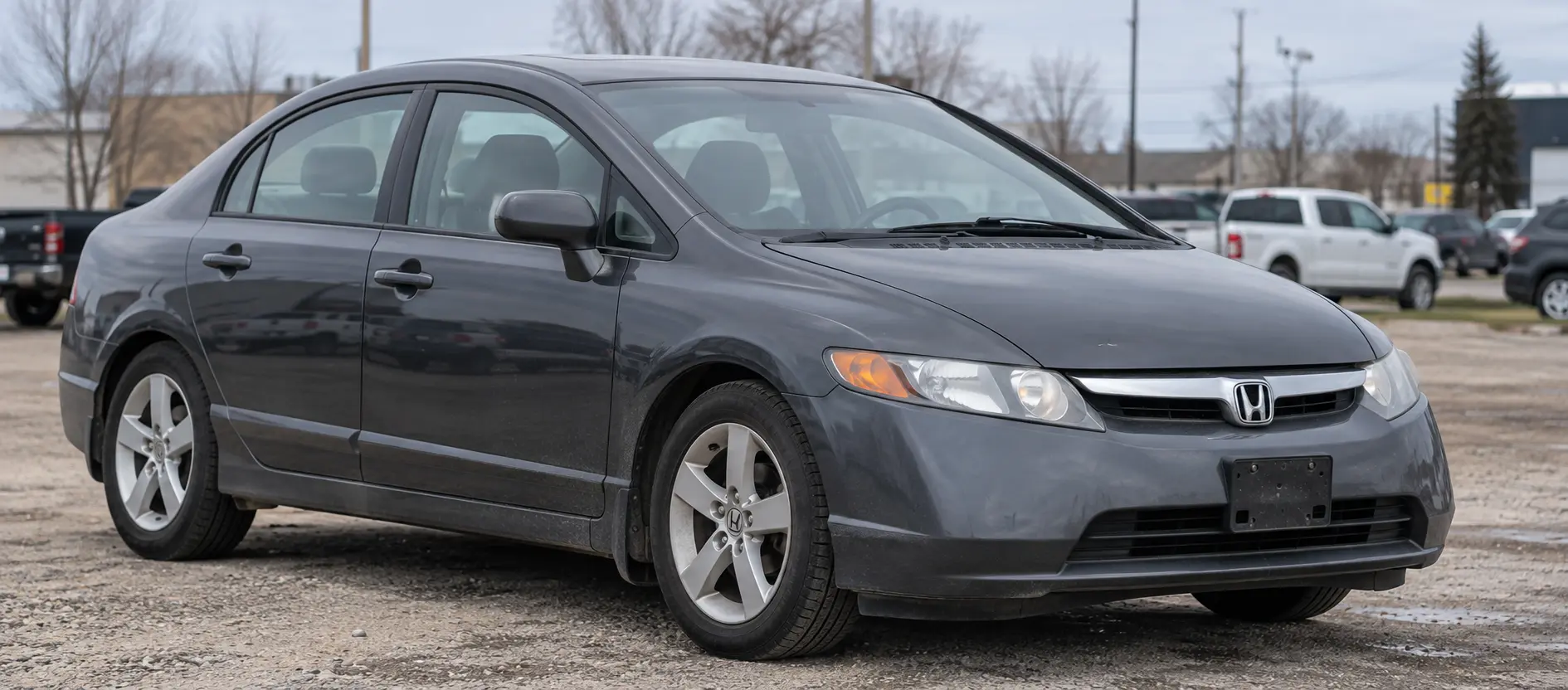
2009 Honda Civic, 290,000 km, failed out-of-province inspection
| Inspection | $175 |
| Repair list: ball joints, tie rods, windshield, tires, exhaust | $3,100 |
| Value once repaired and registered | $3,800 to $4,500 |
| Value as is today | $900 to $1,400 |
| Repair as a share of post-repair value | about 75 percent |
Verdict: sell. And this one has a trap in it. Until every item passes, the vehicle cannot be registered or insured in Alberta, which means you own something you can neither legally drive nor drive back where it came from. The repair is not optional if you keep it. See our Alberta paperwork guide for the inspection and registration process.
Your numbers will be different. Run them →
When fixing is the right call
We buy cars. We would still rather you fix this one if fixing is the better outcome, because the alternative is selling you a decision you regret and collecting a review that says so.
Fix it when:
When selling as is makes more sense
What is my car worth right now?
Three different numbers get called car value, and they are not interchangeable. Most people comparing them are comparing the wrong ones.
| Type of value | What it means | Where to get it |
|---|---|---|
| Private sale value, sometimes called fair market value of your car | What a person pays you directly, working, after weeks of listing | Marketplace and AutoTrader comparables |
| Trade-in value | What a dealer allows against a purchase, plus the Alberta tax credit | Dealer appraisal |
| As-is cash value | What a buyer pays today with the fault present, no repair, no listing | A direct offer |
Online tools that check car value, appraise your car or estimate the current market value of your car are almost always reporting the first of the three. A valuation tool showing your car is worth $6,000 is showing private sale value for a working example. If yours does not run, that figure is not available to you and comparing your offer against it is comparing two different things.
The as-is number is the only one that applies to a vehicle with a fault, and it is the one no online valuation tool will give you, because it depends on what specifically is broken.
How to decide in sixty seconds
Take the repair quote
Start with the number from your shop.
Look up what it sells for, working
Marketplace sold listings for your year, model and kilometers. Not asking prices.
Divide the quote by that number
The percentage tells you which side of the threshold you are on.
Under 30 percent, fix it. Over 50 percent, sell it. In between, the deciding factor is what else is due in the next year.
Compare against the threshold
Under 30 percent, fix it. Over 50 percent, sell it. In between, check what else is due.
Get an as-is offer to verify
Before committing either way, get an as-is offer so you are comparing against a real figure rather than an assumption.
Common questions
At what point is a car not worth repairing?
A car is generally not worth repairing once the quote passes about half of what the vehicle would be worth once fixed, or about 30 percent if another major repair is due within a year. Red Deer Car Buyers publishes current Alberta repair costs so you can check that against your own quote.
Is it worth replacing an engine or transmission on a high mileage car?
Rarely. An engine replacement runs $2,700 to $11,500 in Alberta and a transmission $2,800 to $7,500, which on a vehicle past 200,000 km usually exceeds half its repaired value. Red Deer Car Buyers buys vehicles with failed engines and transmissions, so the as-is number is easy to get.
How much does a transmission cost in Alberta?
A rebuild runs about $2,800 to $6,000 and a remanufactured replacement about $3,800 to $7,500, parts and labour. CVTs run higher, roughly $4,500 to $8,500, because fewer shops carry the equipment. Alberta independent shop laborsits at $95 to $130 per hour in 2026.
Does a car with a blown engine have any value?
Yes, usually more than owners expect. The transmission, body, glass, wheels, electronics and catalytic converter all retain value independently of the engine. Red Deer Car Buyers prices vehicles with a blown engine on what remains recoverable rather than treating the vehicle as scrap.
Should I fix my car before selling it?
Almost never, if the repair is significant. Repairs rarely return their cost at resale, and on a major mechanical failure they reliably lose money. Red Deer Car Buyers buys vehicles exactly as they sit, so there is no advantage in repairing first and usually a measurable loss.
How accurate is the calculator?
It returns a range, not a guarantee, built from Canadian market data and Alberta laborrates reviewed quarterly. It is accurate enough to tell you which side of the threshold you are on, which is the decision. A firm number on your specific vehicle needs a quote.
Is a dealer trade-in better than a cash offer?
Sometimes. Alberta gives a tax credit on the trade value against your replacement purchase, which on a higher-value vehicle can close most of the gap. It only applies if you are buying from a dealer, and most dealers will not take a non-running vehicle at all.
Get the third number
You have the repair quote. Find out what it is worth as is, today, and you have a decision instead of a guess. No obligation, free towing if you sell, and if the answer is fix it we will say so.
Open 8 AM to 8 PM, seven days. Quotes sent overnight get a callback first thing.
Read More
Should You Repair or Sell Your Car? A Plain Guide for Alberta Owners
A repair is generally worth doing when it costs less than about half of what the car will be worth once fixed, and selling as is usually nets more above that line. Two things the percentage can’t show still matter: whether another major repair is likely within a year, and what the car would sell for as is today.
Four things shape the choice:
- The three numbers: the repair quote, what the car will be worth once repaired, and what it would sell for as is today. Dividing the quote by the repaired value gives the percentage the rule uses.
- The risk: a repair fixes one fault, not the age of everything around it, so it’s worth asking what else is worn.
- The timing: if another major repair is due within a year, the limit drops to about 30 percent, and a documented service history with no structural rust can lift it to about 60.
- The next step: work out the percentage and check it against an as-is figure, which together answer “Is my car worth repairing?” If they point to selling, the Cash for Cars Red Deer page explains how a sale as-is works.
The decision usually arrives as a single question, “Should I fix or sell my car?”, right after a repair quote lands. It feels urgent because the shop needs an answer, but the comparison itself is short.
The repair or sell car question has the same structure for almost every vehicle, whether it’s an older sedan or a work truck, because the comparison only needs three numbers and a little judgment.
What Does Worth Repairing Mean? Repair Cost Against Repaired Value
Worth repairing means the repair costs a small enough share of what the car will be worth once fixed. The rule we use puts the line at about half: below it, repairing generally beats selling as is, and above it, selling usually nets more.
Car repair cost vs car value is the comparison at the heart of that rule, with the quote on one side and the repaired value on the other. Three things define it:
- What counts as the repair cost: parts, labor and taxes on the quote, plus any related work the shop says has to be done at the same time.
- What counts as value: what the car would sell for once repaired, taken from sold prices for your year, model and kilometers, not from asking prices or a gut feeling.
- What’s left out: the as-is value, the risk of another failure and the days without the car, none of which the percentage captures.
The rule is easiest to read at its two ends:
- Repair cost more than car worth: the quote is bigger than the whole car’s value, so the repair is far past the half line and selling as is nets more.
- A repair well under half of the repaired value: fixing generally comes out ahead, unless another major repair is due soon.
Between those ends, the percentage is a starting point and not a verdict, because a repair can sit under the line and still be a poor deal when something else is due.
Is It Worth Fixing a Car That Is Worth Less Than the Repair?
Sometimes it is, because what the car is worth today isn’t what the rule measures. The rule compares the repair with what the car will be worth once fixed, and three cases show how that plays out:
- Is it worth fixing a car worth less than repair cost? It can be, when the car is worth far more once fixed. A low as-is value doesn’t decide it, and the case is common when one fault is the only thing holding the value down.
- What if the repaired value is low too? Then the repair is a large share of the repaired value, usually well past half, and selling as is generally nets more.
- What if the repair is under half but more work is waiting? Then the limit drops toward about 30 percent, so a repair that looked fine can fail the test once the next job is counted.
Repair Quote Too High? What to Do Before You Say Yes
Sometimes the shop calls back with a repair quote too high. What to do first is simple: don’t give an answer yet. Five steps turn the quote into a decision you can defend.
- Ask for a written breakdown. A quote that lists only a total can’t be compared with a second one.
- Check the repaired value. Look up sold prices for your year, model and kilometers, not asking prices.
- Get the as-is value. A direct offer shows what the car sells for with the fault present, and it’s the number owners skip most often.
- Get a second quote on the same repair. Tip: ask both shops to price the same type of parts, whether new, remanufactured or used, so the totals compare fairly.
- Decide. Divide the quote by the repaired value, then adjust the limit for what else is due: about 30 percent if another major repair is coming within a year, and up to about 60 with a documented history and no structural rust.
Saying no to the first quote doesn’t commit you to selling. It keeps the decision yours until the numbers are in, and a shop that’s confident in its diagnosis will usually put the breakdown on paper.
Questions to Ask Your Mechanic Before You Approve a Major Repair
The list below covers questions to ask mechanic before repair starts, with a note on what a useful answer sounds like:
- What exactly failed, and how do you know? A useful answer points to a test or an inspection finding, not a guess.
- What else is worn that could fail soon? This is where a one-repair quote turns into a list, so ask for it in writing.
- Is the repair fixing the cause or the symptom? A part replaced without finding why it failed may fail again.
- What type of parts are you using? New, remanufactured and used parts differ in price and in how long they tend to last.
- What warranty comes with the work? Ask whether it covers parts only or parts and labor, and for how long.
- How long will it take, and what happens if the job grows? Ask who has to approve extra work before it’s done.
- What happens if it fails again? You want to know whether the shop stands behind the repair or only the part.
Write the answers next to the quote. Vague answers to the first two questions are a useful warning, because they suggest the diagnosis isn’t finished. Alberta’s automotive regulator, AMVIC, lists what a licensed repair business has to provide in writing, including an estimate on request and details of the parts installed, on its Repairing a vehicle page.
The 50 Percent Rule for Car Repairs: What It Says and Where It Falls Short
The 50 percent rule says a repair generally isn’t worth doing when it costs more than about half of what the car will be worth once fixed. The 50 percent rule car repair guides mention is a shortcut: easy to remember, quick to apply and blunt about what it leaves out.
- Where it comes from: it’s a widely repeated guideline, not a regulation, and different sources attach slightly different percentages to it.
- What it ignores: what the car would sell for as is, the risk of another failure, the time without the car and how much you depend on it.
- Where it works: as a quick first filter on an ordinary car, and when the repair is clearly far above or far below half.
As a car repair rule of thumb, it’s useful as a first filter, before you gather the other numbers. The adjustments to that rule, about 30 percent when another major repair is due within a year and about 60 percent for a documented, rust-free car, exist because a single percentage can’t fit every car.
Common Repair Rules Side by Side: Where Each One Works and Fails
Car repair vs replace comes up in every rule of thumb, and each one answers it from a different angle. The table sets four common approaches next to each other.
| Rule | What it says | When it fits | When it fails |
|---|---|---|---|
| Half-of-repaired-value rule | Repair only if the cost is under about half of what the car will be worth once fixed | A quick first check on an ordinary car | The car is worth very little or a lot, or has other repairs due, since one percentage can’t cover those cases |
| Timing adjustments | Lower the limit to about 30 percent when another major repair is due within a year, and raise it to about 60 percent for a documented, rust-free car | You know the service history and what’s due next | Records are missing or the next repair is a guess |
| As-is cross-check | Compare what you’d have after repairing, the repaired value less the repair cost, with the as-is value | You have a real as-is figure | The as-is figure is a guess, and it leaves out risk and time |
| Repair against replacement cost | Repair if it costs far less than replacing the car | You’d have to replace the car either way | The replacement you imagine isn’t a fair match for the car you have |
No rule replaces the numbers for your own car. Each one is a way to decide how much to trust a quick answer, and each improves when the as-is value and the risk are added to the picture. The rules built on percentages are the easiest to quote and the easiest to misuse, because a percentage of the wrong number gives a confident wrong answer.
Why the Answer Changes When Another Repair Is Due Soon
Timing changes the decision because a repair only buys time until the next failure, and a few short answers show how:
- Why does a second repair change the answer? Each repair is worth the time it buys, so if another major repair is due soon, the first one buys less.
- How much does it change? One rule of thumb we use lowers the limit from about half of working value to about 30 percent when another major repair is due within a year. It’s a guideline, not a law.
- What can raise the limit? A documented service history and no structural rust. The same rule of thumb allows up to about 60 percent in that case, because the repair is more likely to be the last big one.
A reliable sign of when to stop repairing an old car is a repair that keeps being followed by another, because the car has stopped being dependable transport and each bill buys less than the last.
Is It Worth Repairing an Old Car? What Age Does and Does Not Decide
Age sounds like a verdict, but it rarely settles the question on its own. An older car in sound condition can be a better repair candidate than a younger one with rust underneath, because the repair only pays off if the car lasts long enough to use what it restored.
A mechanic and a buyer look at the same things instead of the birth year: whether the structure is rust-free, whether the service history is documented and whether parts are easy to get. In Alberta, winter road treatment makes rust underneath worth checking on any older car, and parts availability matters more on a model that’s no longer common.
So is it worth repairing an old car? When the structure is sound, the history is documented and parts are easy to find, often yes. When any of the three is missing, the same repair bill buys less.
Is It Worth Fixing a High Mileage Car? What to Check First
The odometer reading raises the question “Is it worth fixing a high mileage car?”, but the answer sits in how the car was kept, and these checks cover it:
- Service records: regular oil changes and documented major services suggest the car was looked after.
- Leaks: oil, coolant or transmission fluid under the car can point to seals or gaskets that are next.
- Rust: surface rust is cosmetic, but rust in the frame, subframe or mounting points limits how long any repair can last.
- Past repairs: a recently replaced transmission or timing chain changes what’s left to fail.
- What’s due next: the next major service, or a known weak point for the model, can outweigh the repair in front of you.
- Parts cost: some models have cheap, common parts, while others are expensive or hard to source.
How many kilometres is too many for a car depends on maintenance, not a fixed number, because a well-kept car can outlast a neglected one with far fewer. That’s why the checks above matter more than the odometer.